
Explore
Monuments of Uzbekistan
Monuments and historic complexes across Uzbekistan — each with photos, a map and a narrated guide in your language.
Near you
Find monuments around you
Share your location to see which monuments are closest to you right now.
Complexes and ensembles
Start here: each complex page introduces the site and links to every monument in it.
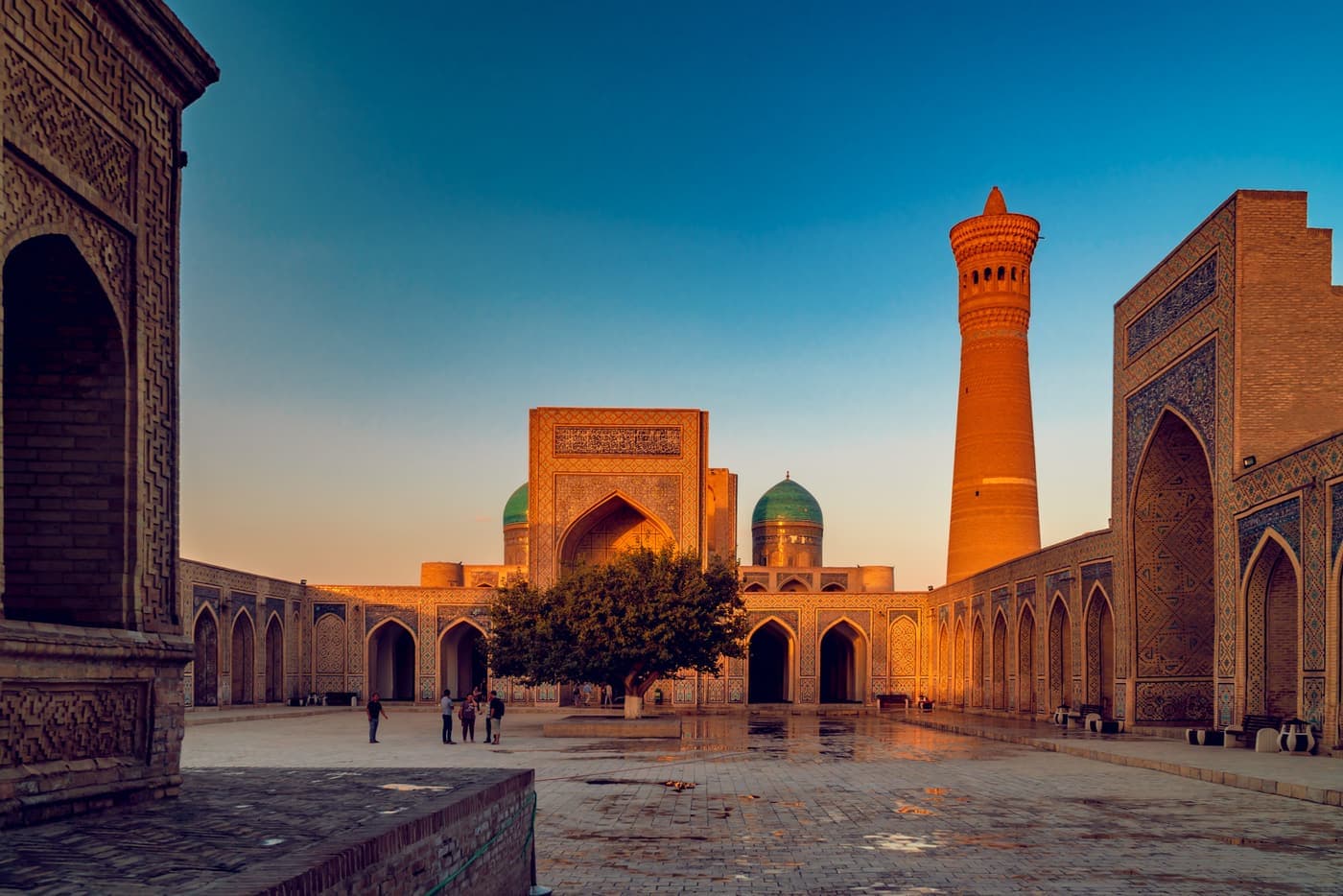
Poi-Kalyan Ensemble
Bukhara's monumental heart: a twelfth-century minaret between a vast Friday mosque and a working madrasa.
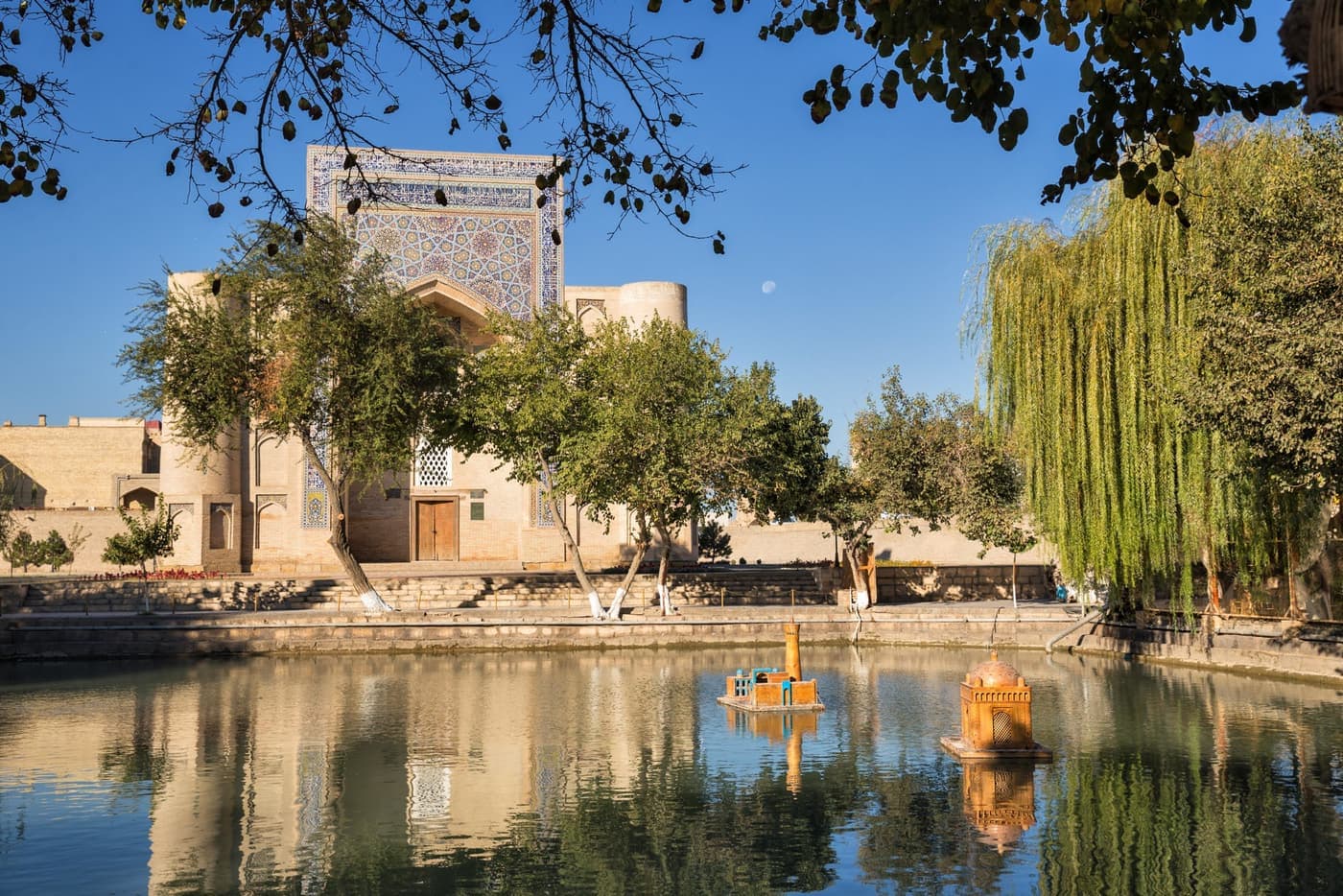
Lyabi-Hauz Ensemble
A seventeenth-century pond ringed by a madrasa, a khanqah and mulberry trees — still the city's favourite meeting place.

Bolo-Hauz Complex
The emir's Friday mosque facing the Ark across a pond, the twenty carved columns of its ayvan doubled in the water.
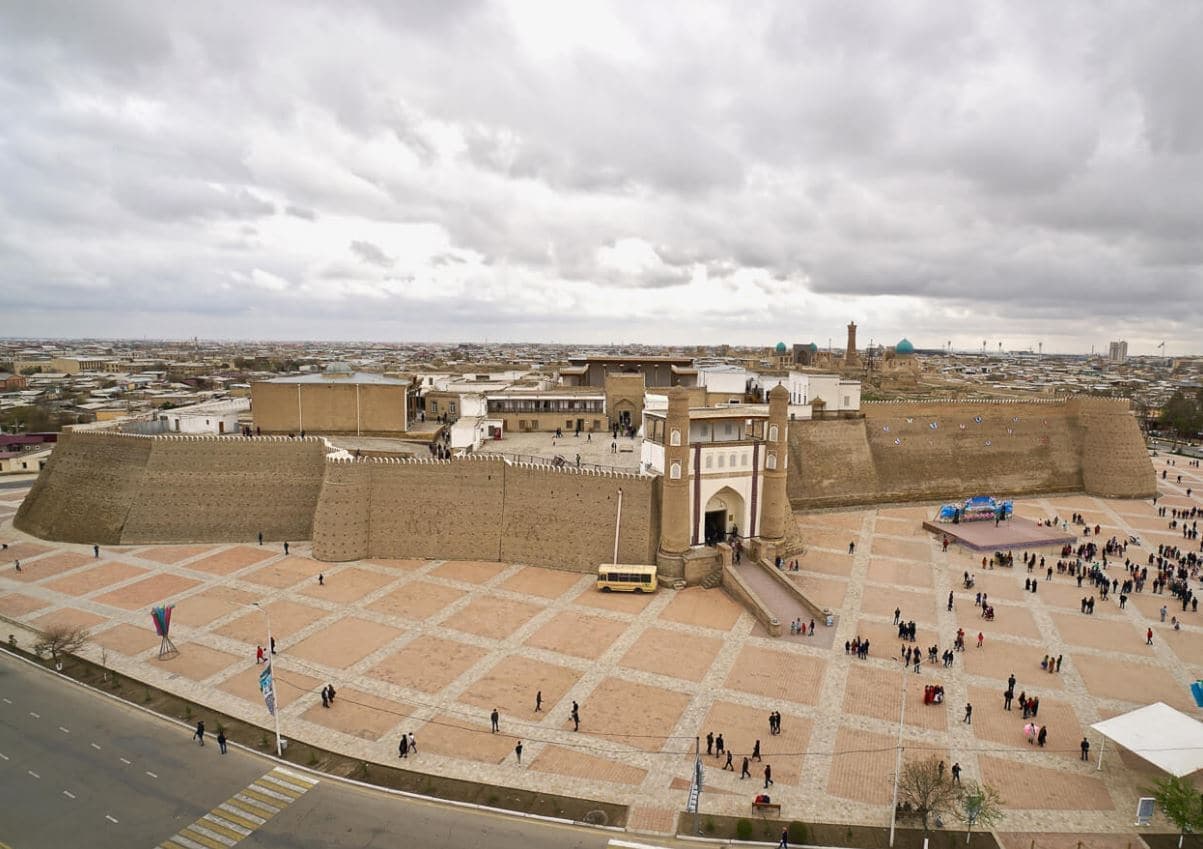
Ark / Registan Complex
The fortress of the emirs on its artificial hill, and the open square below it where the city's public life happened.

Chor-Bakr Complex
A city of the dead five kilometres west of Bukhara, grown over four centuries around the graves of the Juybari sheikhs.
Monuments
Every individual monument, with its own audio guide and location.
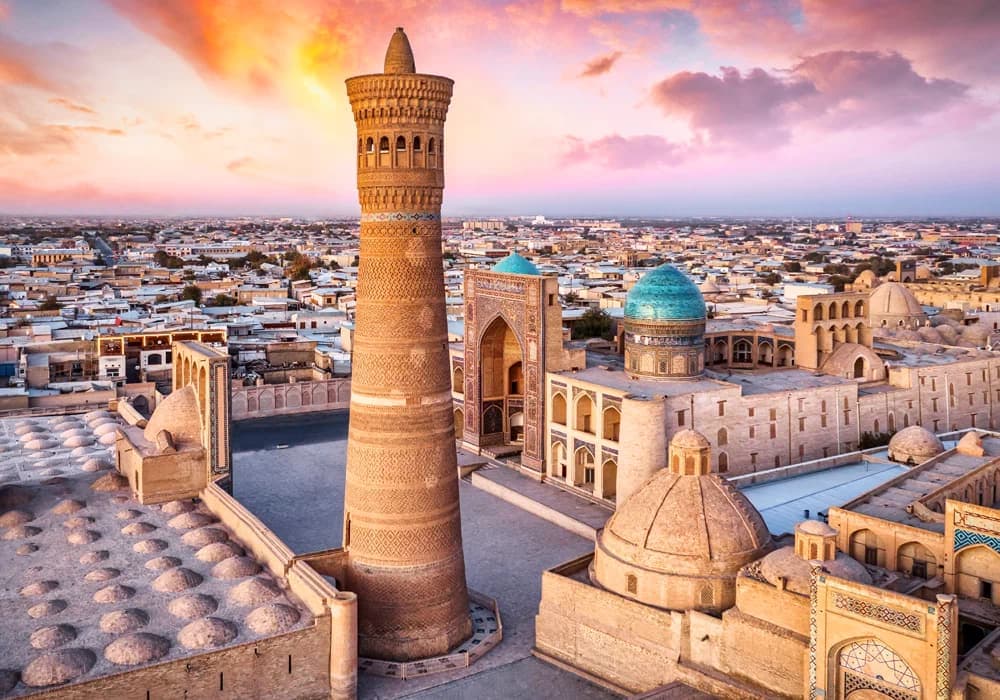
Kalyan Minaret
The brick tower, about 46 metres tall, that has watched over Bukhara since 1127 — spared, the story goes, even by Genghis Khan.
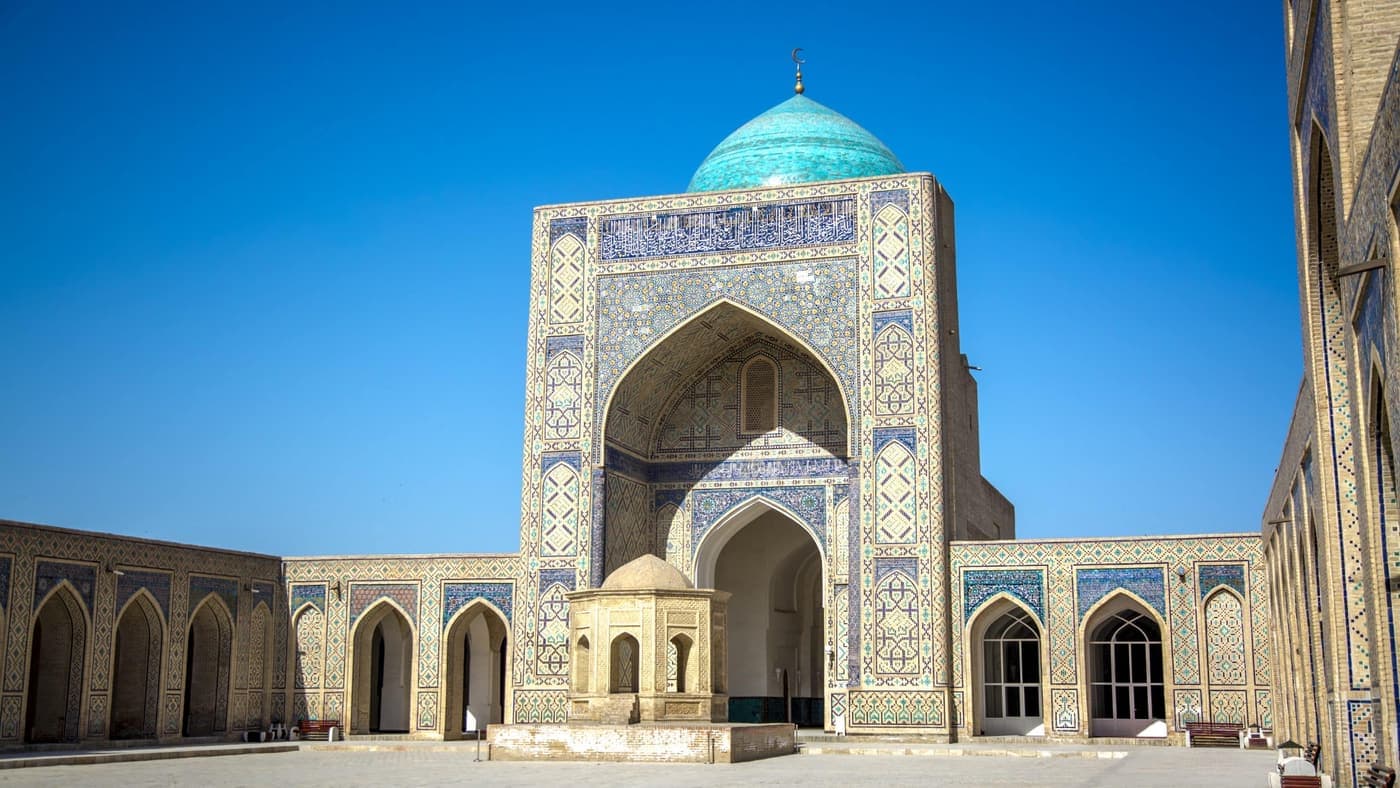
Kalyan Mosque
Bukhara's great Friday mosque, finished in 1514 around a courtyard wide enough for much of the city at prayer.
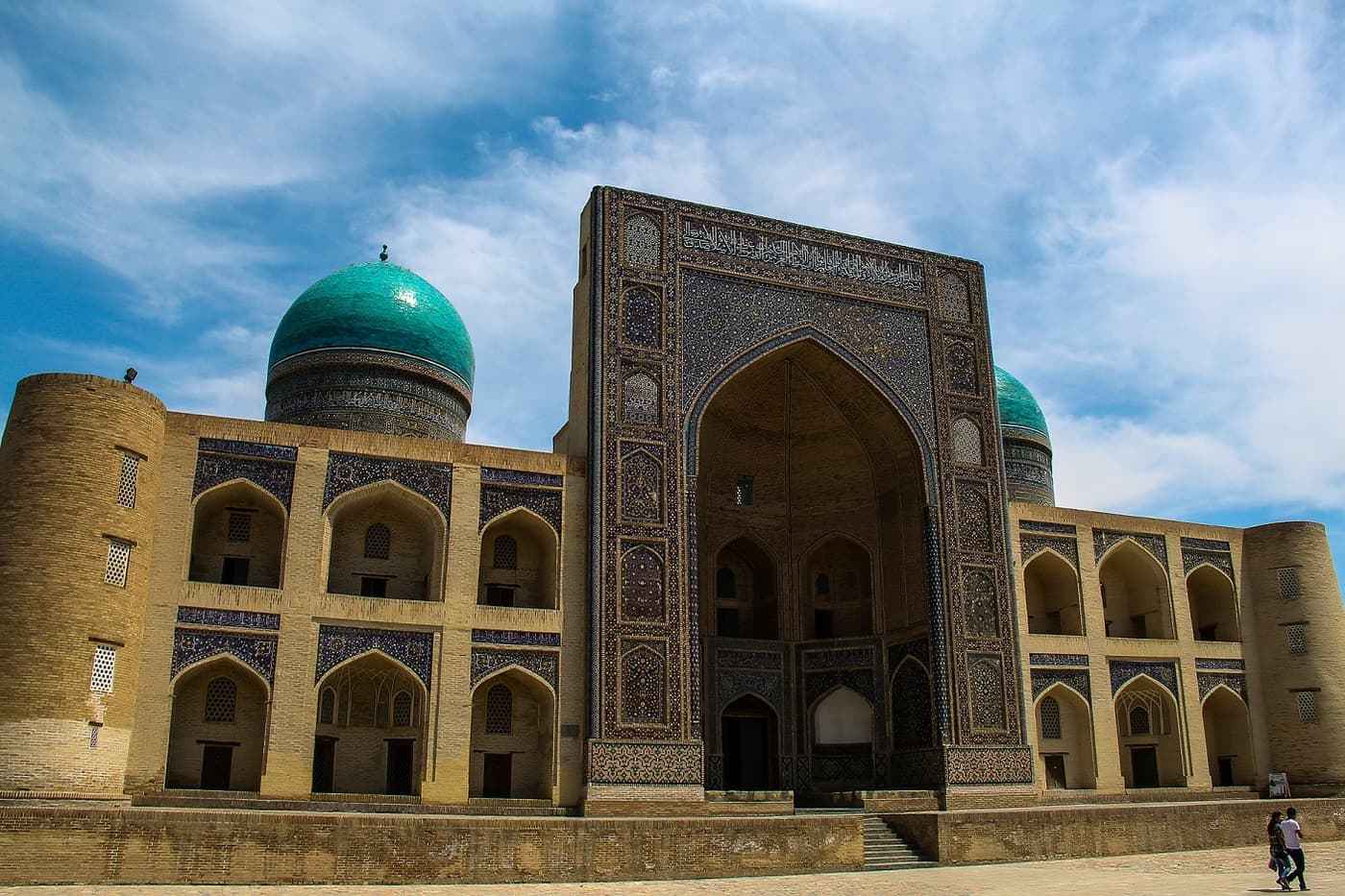
Mir-i-Arab Madrasa
Two blue domes facing the mosque across the square — and a madrasa that has taught students since the 1530s.
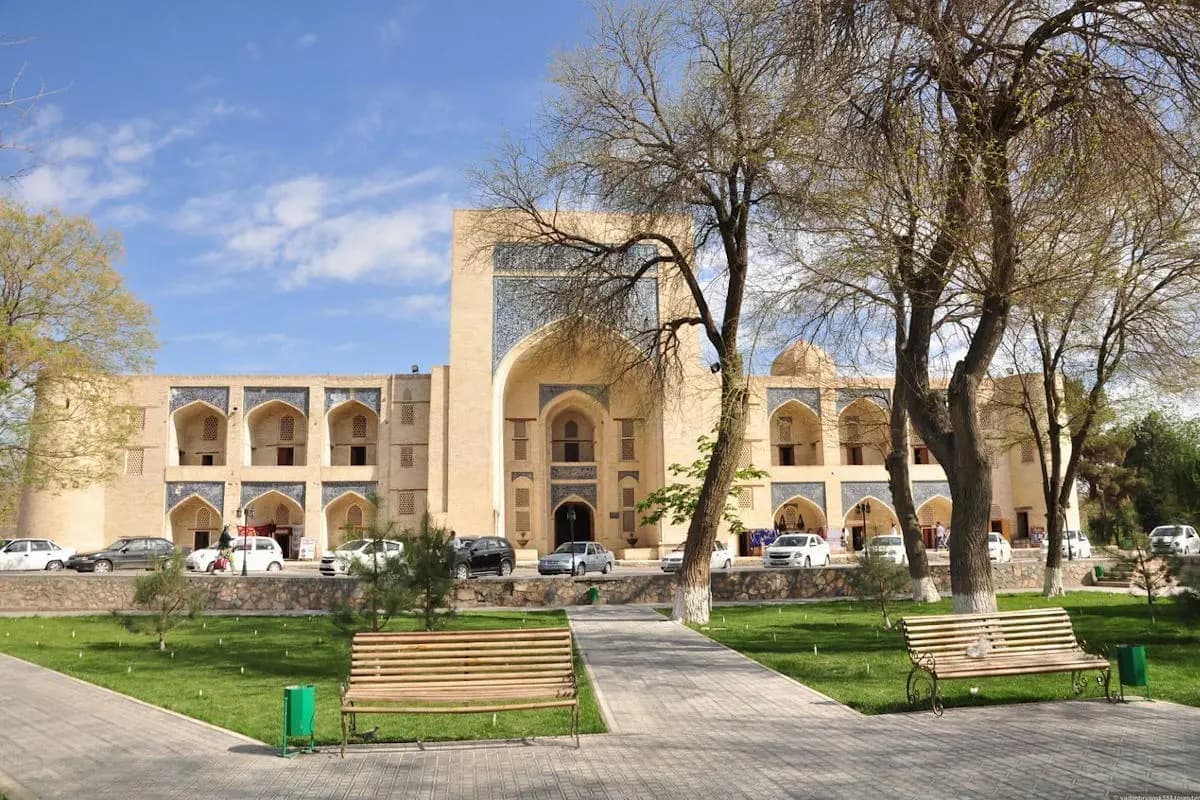
Kukeldash Madrasa
Built in 1568–1569, the oldest and largest building of the Lyabi-Hauz ensemble.
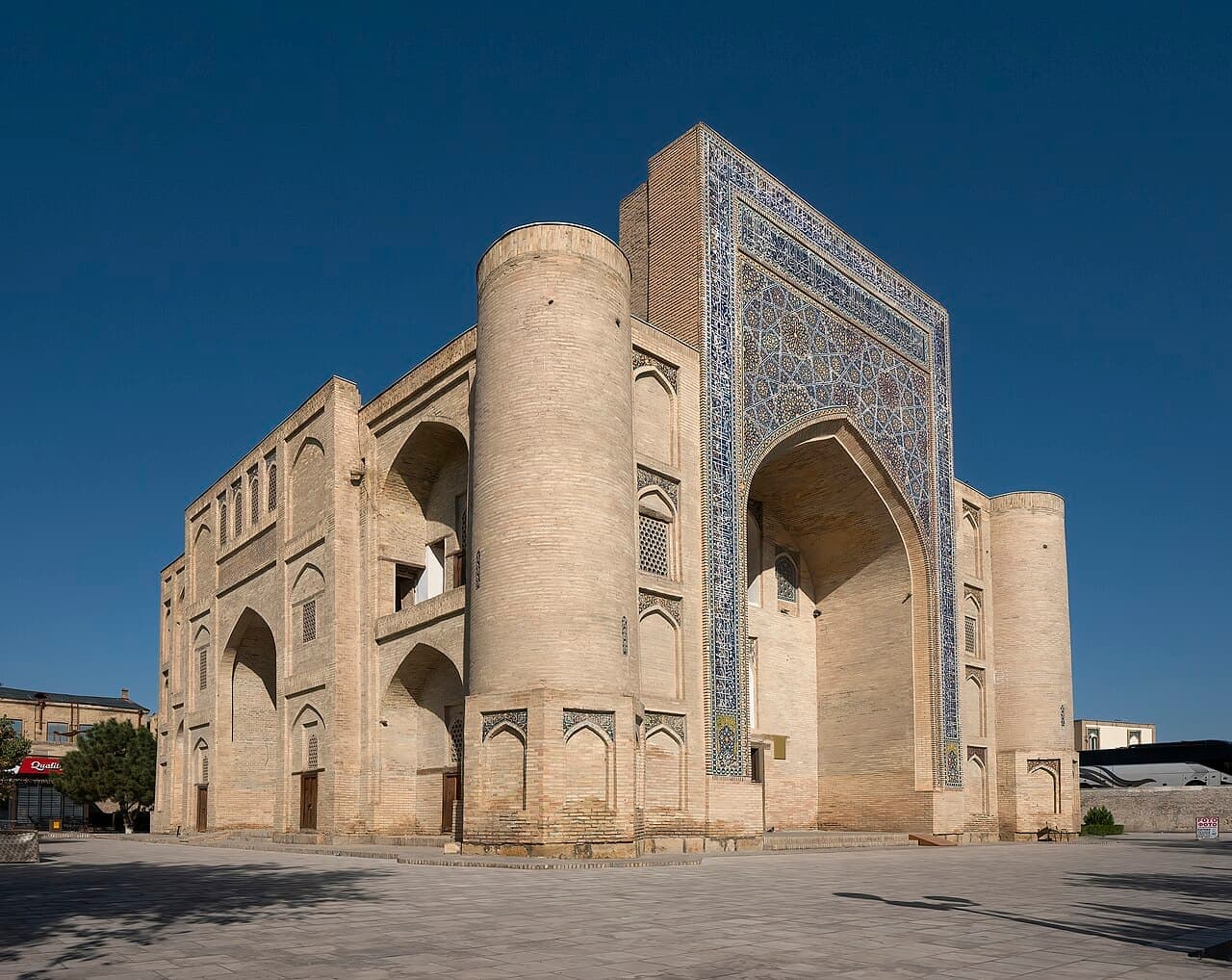
Nadir Divan-Begi Khanqah
A Sufi lodge of about 1619, built to house travelling dervishes on the west side of the pond.

Nadir Divan-Begi Madrasa
Known for the two mythical birds on its portal, often identified as simurghs, flanking a sun with a human face.

Lyabi-Hauz Reservoir
The pond the whole ensemble is named after — once part of Bukhara's water supply, now its living room.
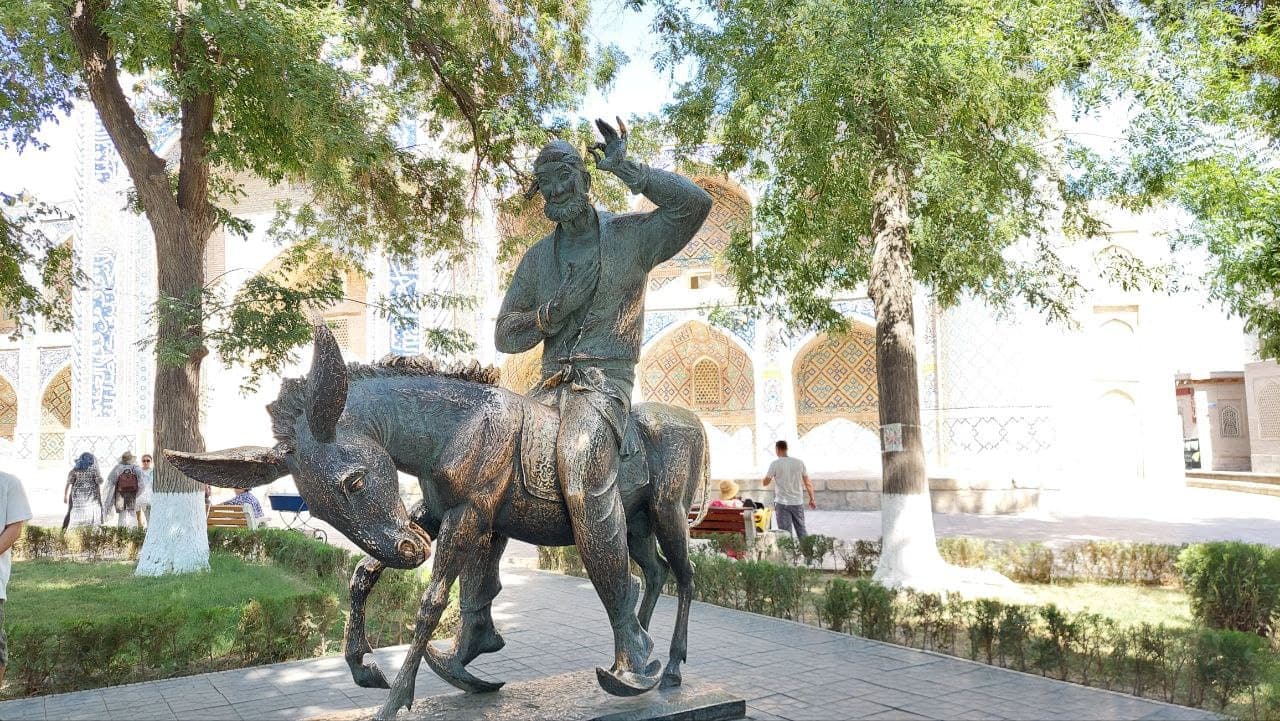
Khoja Nasreddin Monument
The wise fool of Central Asian folk tales on his donkey, cast in bronze in 1979 by the sculptor Yakov Shapiro.

Bolo-Hauz Mosque
The emir's Friday mosque of 1712, fronted by a later ayvan whose twenty carved wooden columns are doubled in the pond.

Bolo-Hauz Minaret
Built in 1917, two centuries after the mosque — a twentieth-century master answering the medieval Kalyan Minaret.

Bolo-Hauz Reservoir
The pond that gave the complex its name, and one of the last working pieces of Bukhara's old water network.
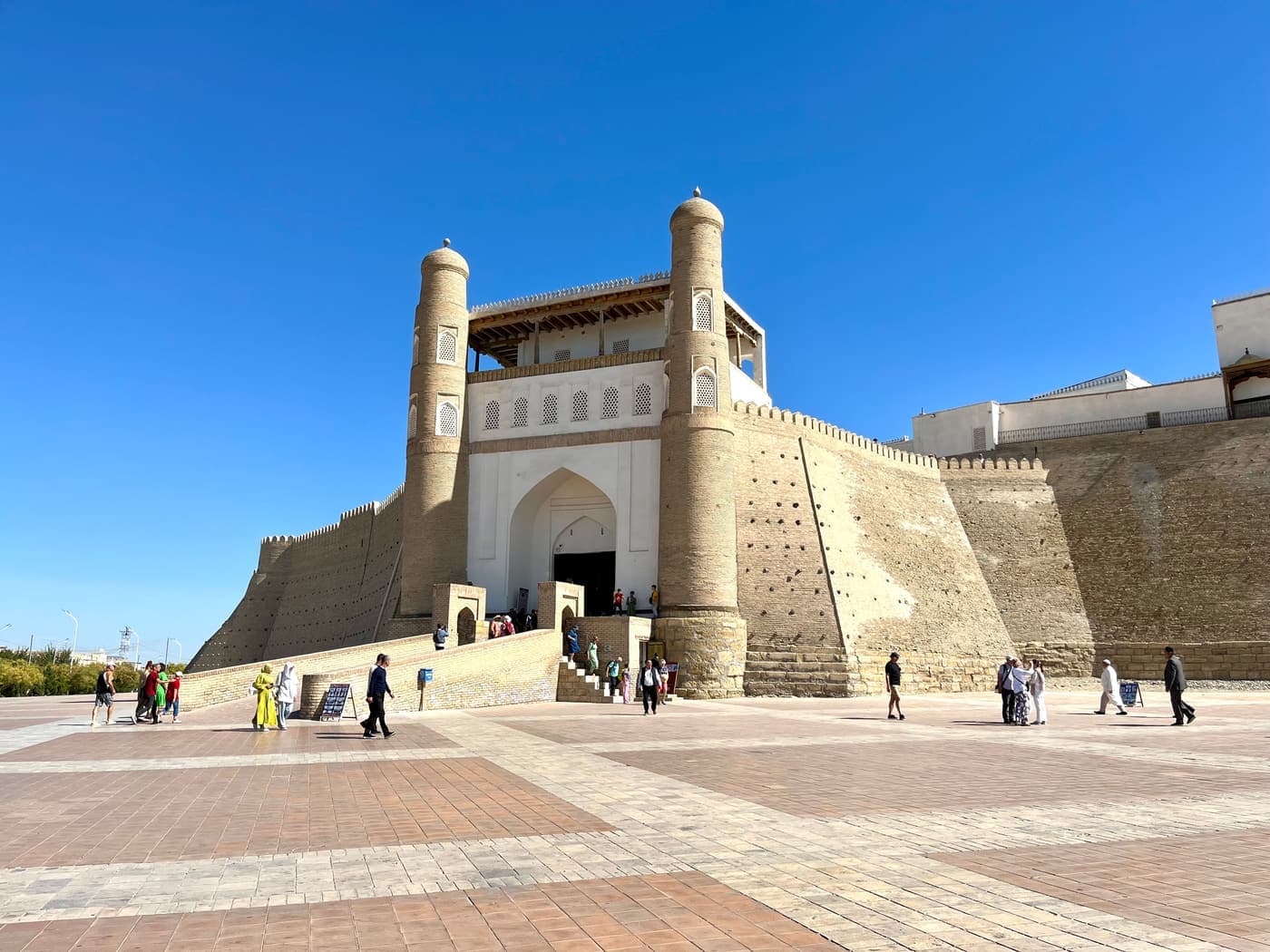
Ark Fortress
The fortress-city of Bukhara's emirs, lived in for some 1,500 years until 1920.

Registan Square, Bukhara
The open ground below the Ark, where Bukhara's rulers and its people met: proclamations, markets and crowds.

Abu-Bakr Sa'd al-Bukhari Mausoleum
The grave the whole necropolis grew around — a tenth-century scholar whose descendants shaped Bukhara for centuries.

Abu-Bakr Fazl Mausoleum
A quiet courtyard for a tenth-century scholar whose greatest legacy was never a building at all.
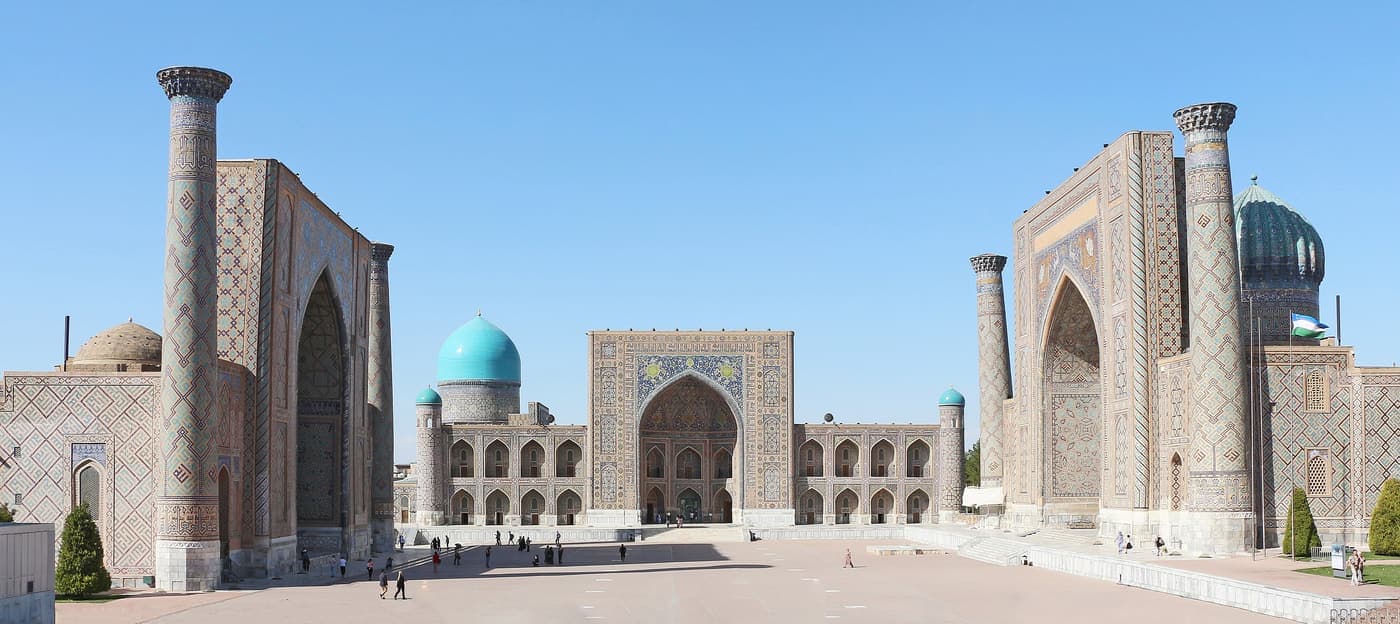
Registan Ensemble, Samarkand
Three madrasas built between 1417 and 1660 face one another across the square at the centre of old Samarkand.
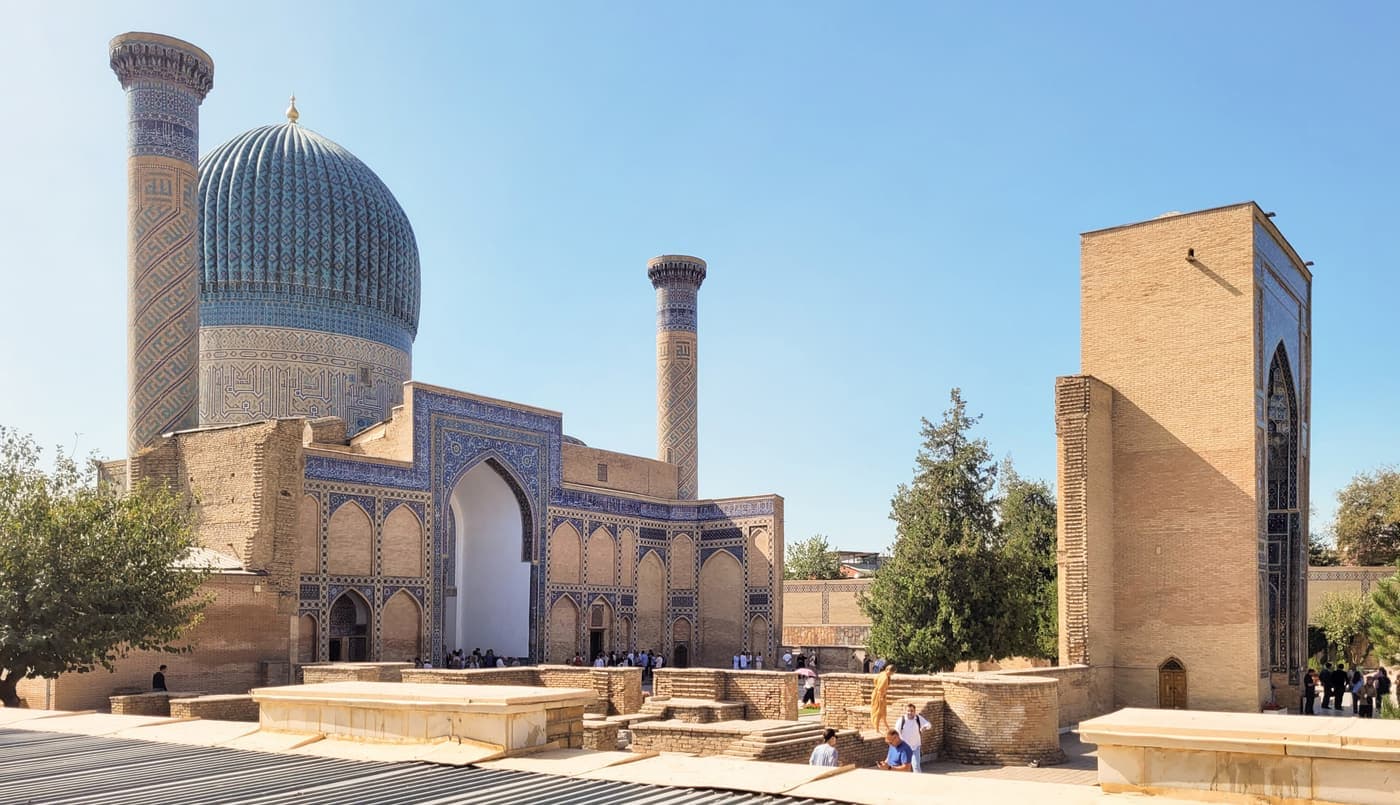
Gur-Emir Mausoleum
The ribbed blue dome over the tomb of Timur, begun in 1403 for his grandson and now the burial place of his dynasty.
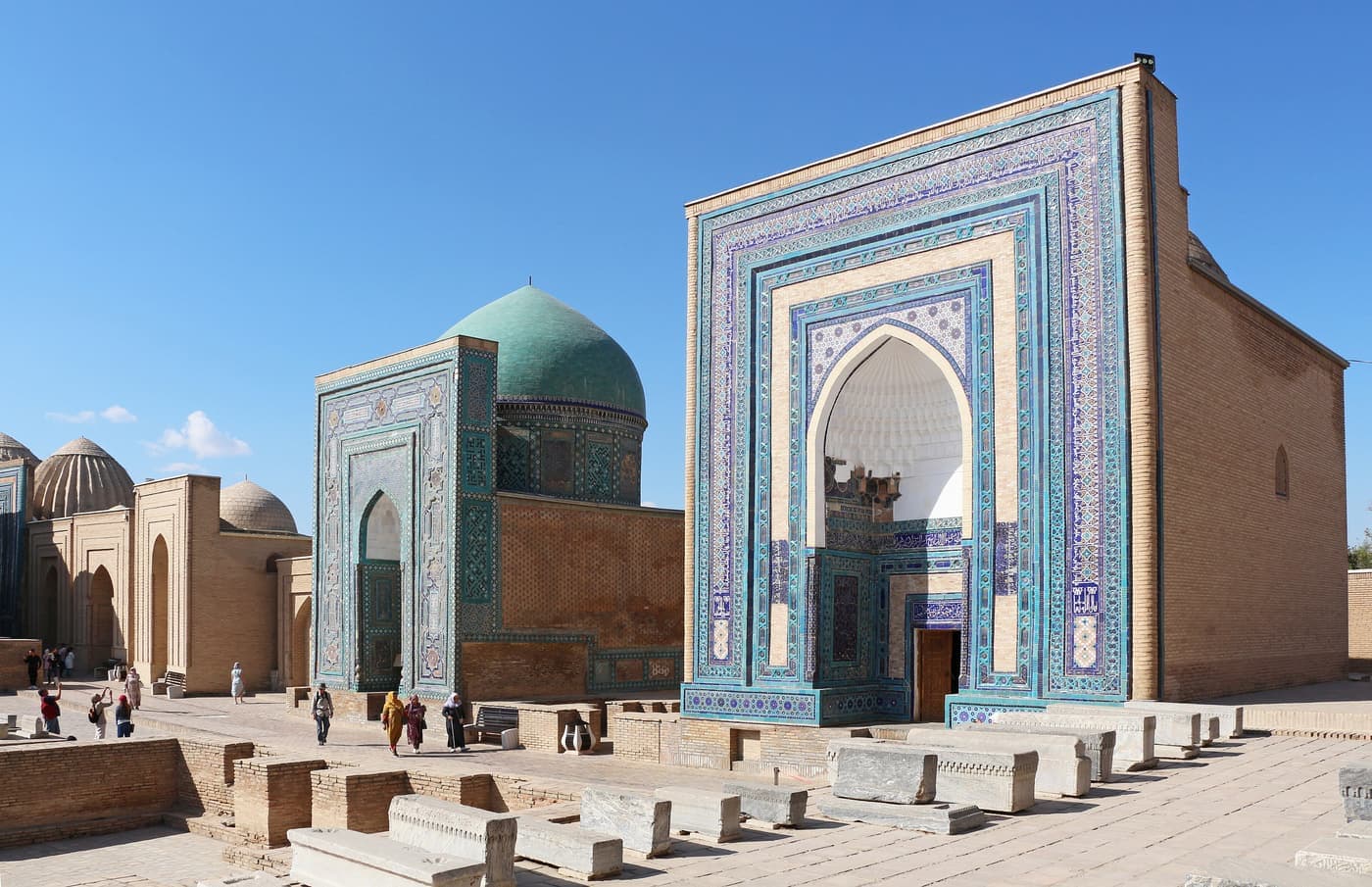
Shah-i-Zinda Necropolis
A lane of tiled mausoleums climbing a hillside, built between the 11th and 19th centuries around a revered tomb.
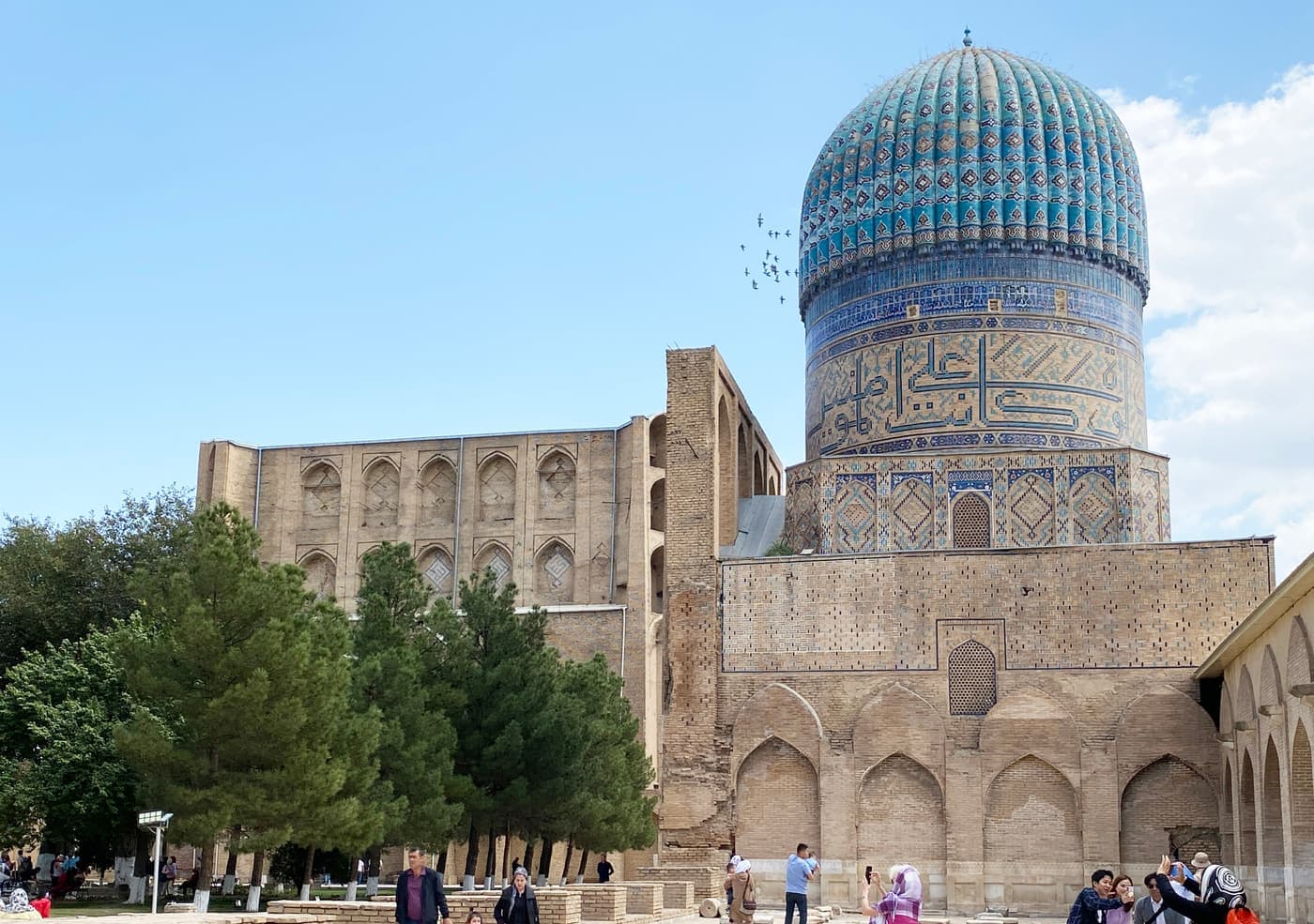
Bibi-Khanym Mosque
Timur's vast Friday mosque of 1399–1404, with a 35-metre entrance portal, partly rebuilt after centuries of collapse.
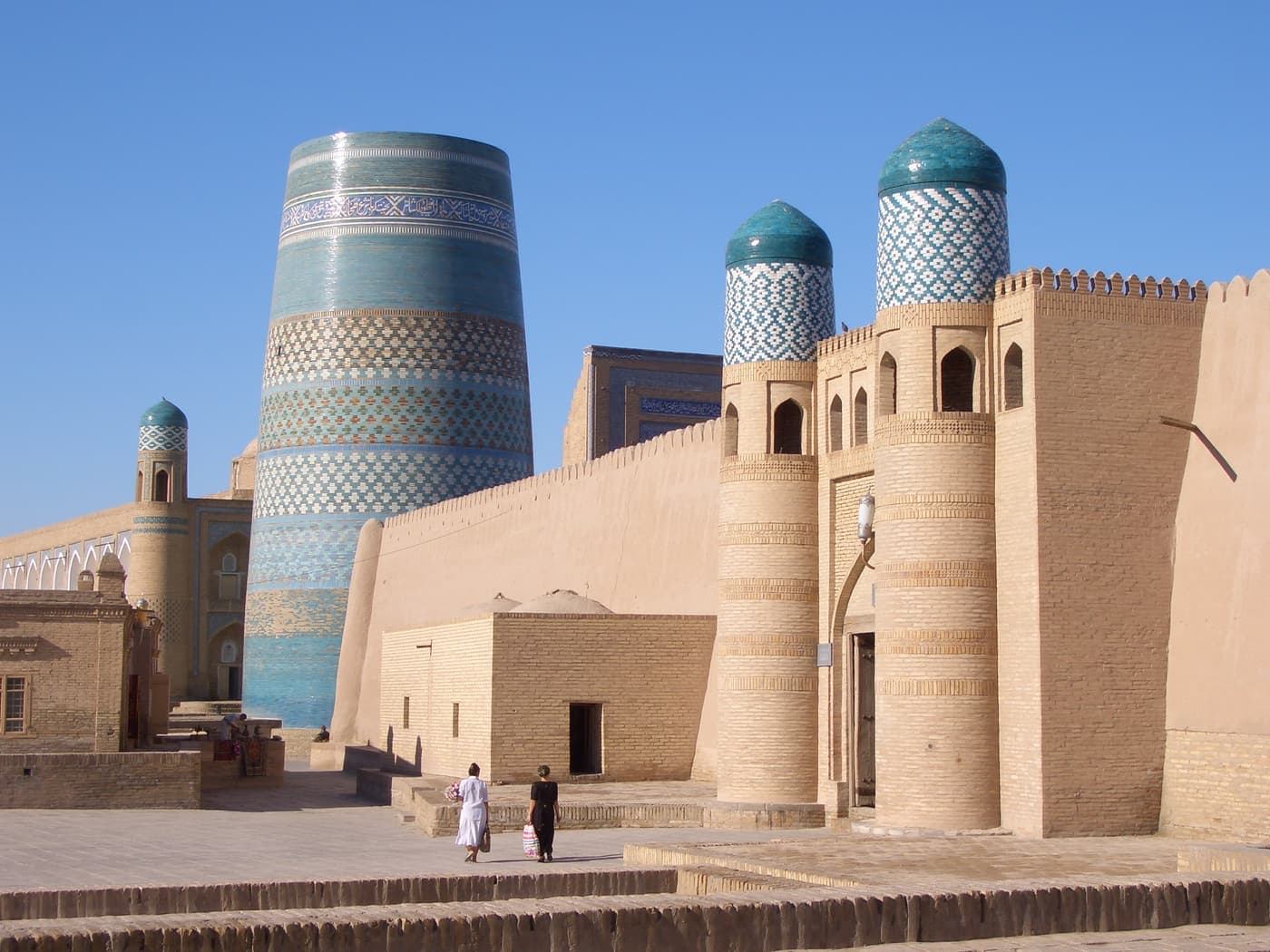
Kalta Minor Minaret
A 29-metre stump sheathed in turquoise tiles: the minaret a khan of Khiva began in 1852 and never finished.
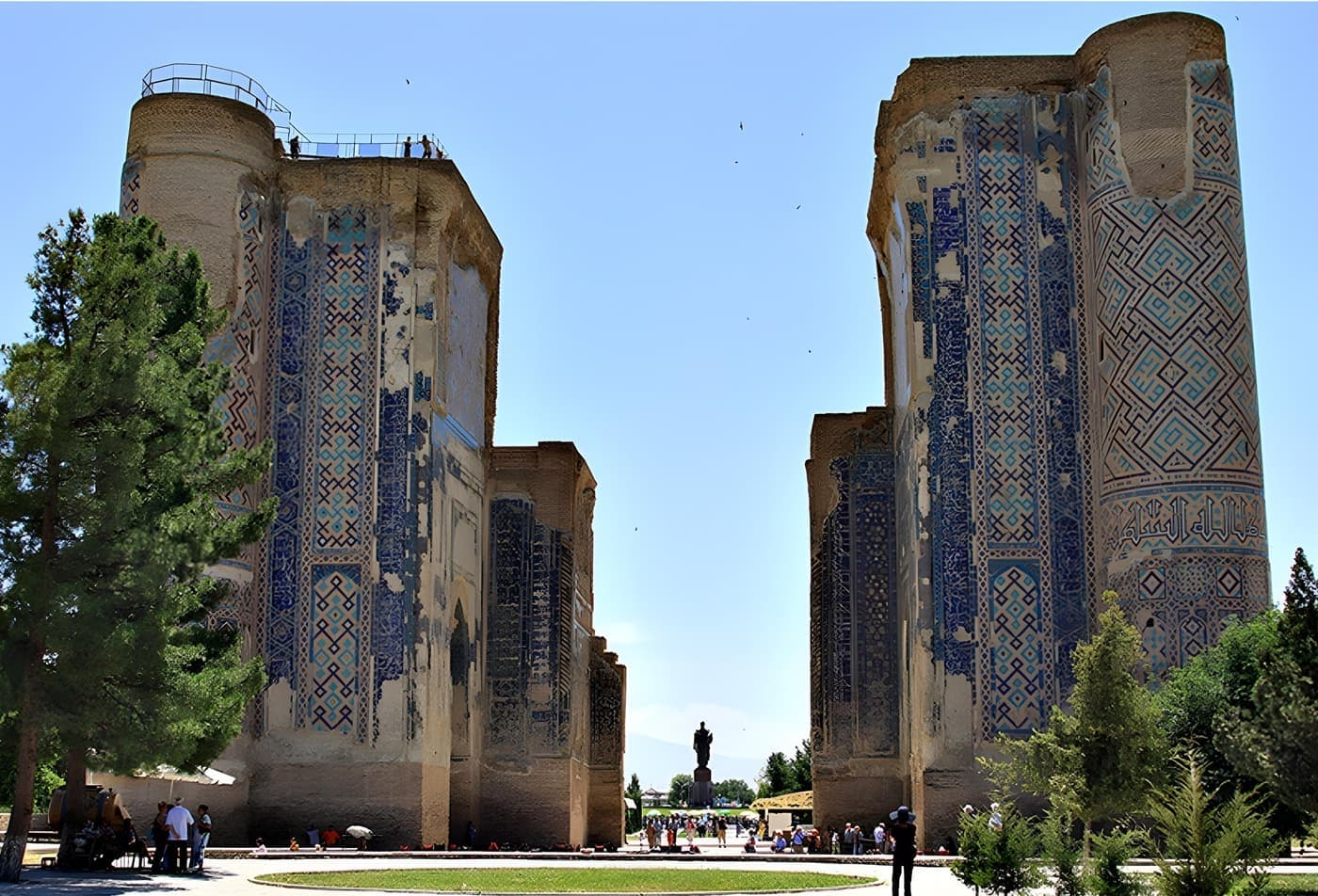
Ak-Saray Palace
Two tiled pylons about 38 metres high are what remains of the palace Timur built in his home town from 1380 to 1404.
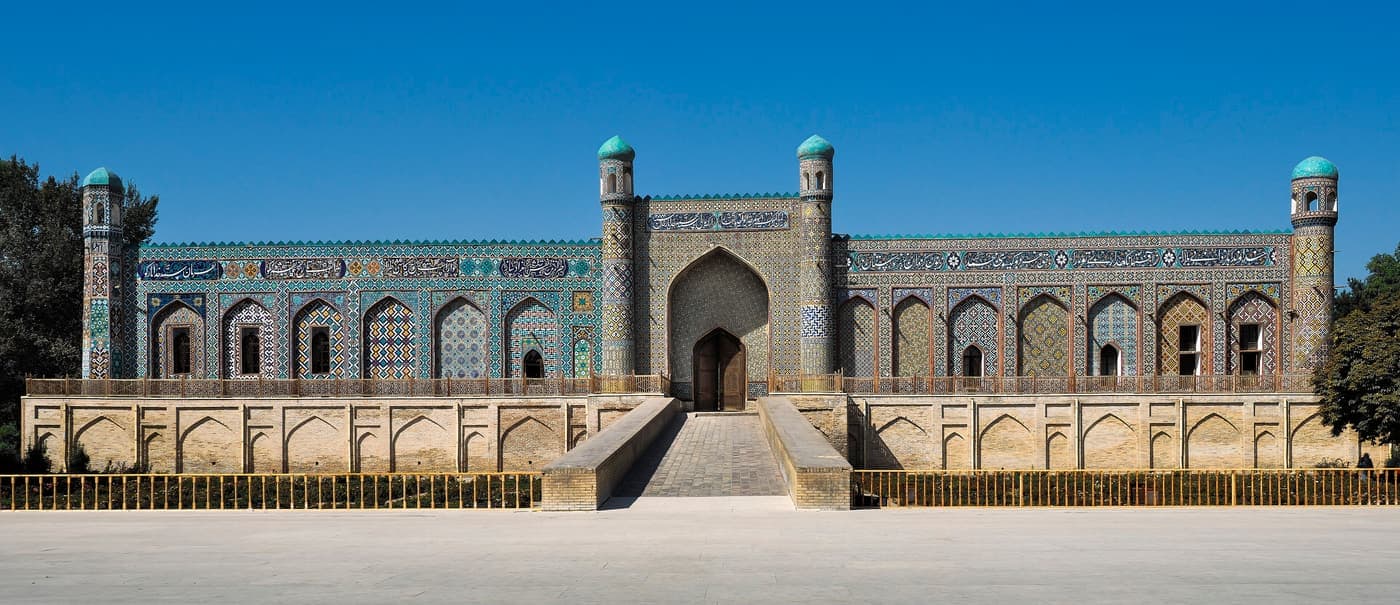
Khudayar Khan Palace
The tiled palace of Khudayar Khan of Kokand, built in the 1860s and early 1870s; 19 of its rooms survive as a museum.
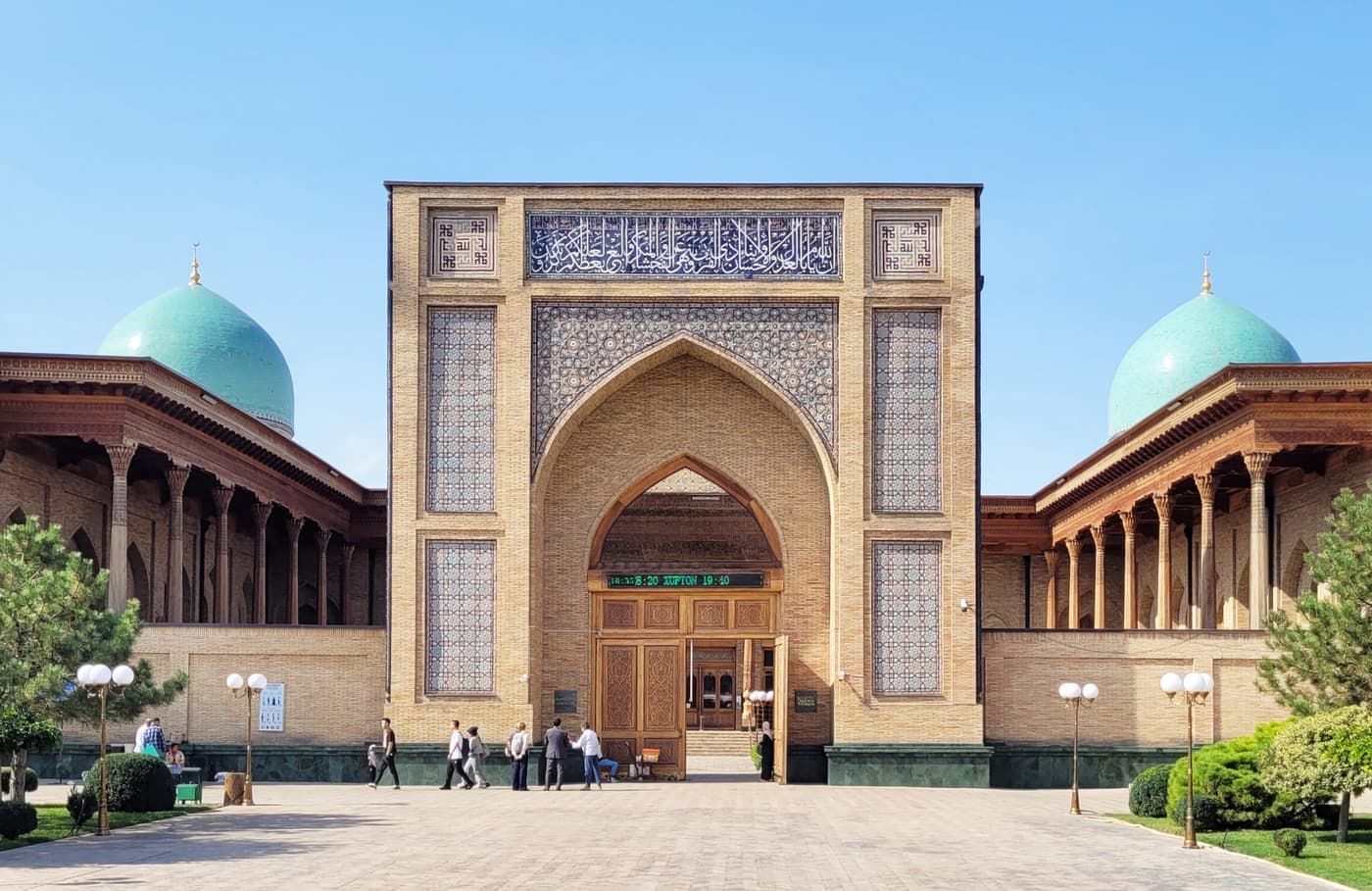
Hazrati Imam Complex
Tashkent's religious centre: a 16th-century madrasa and mausoleum, later mosques and a large mosque added in 2007.
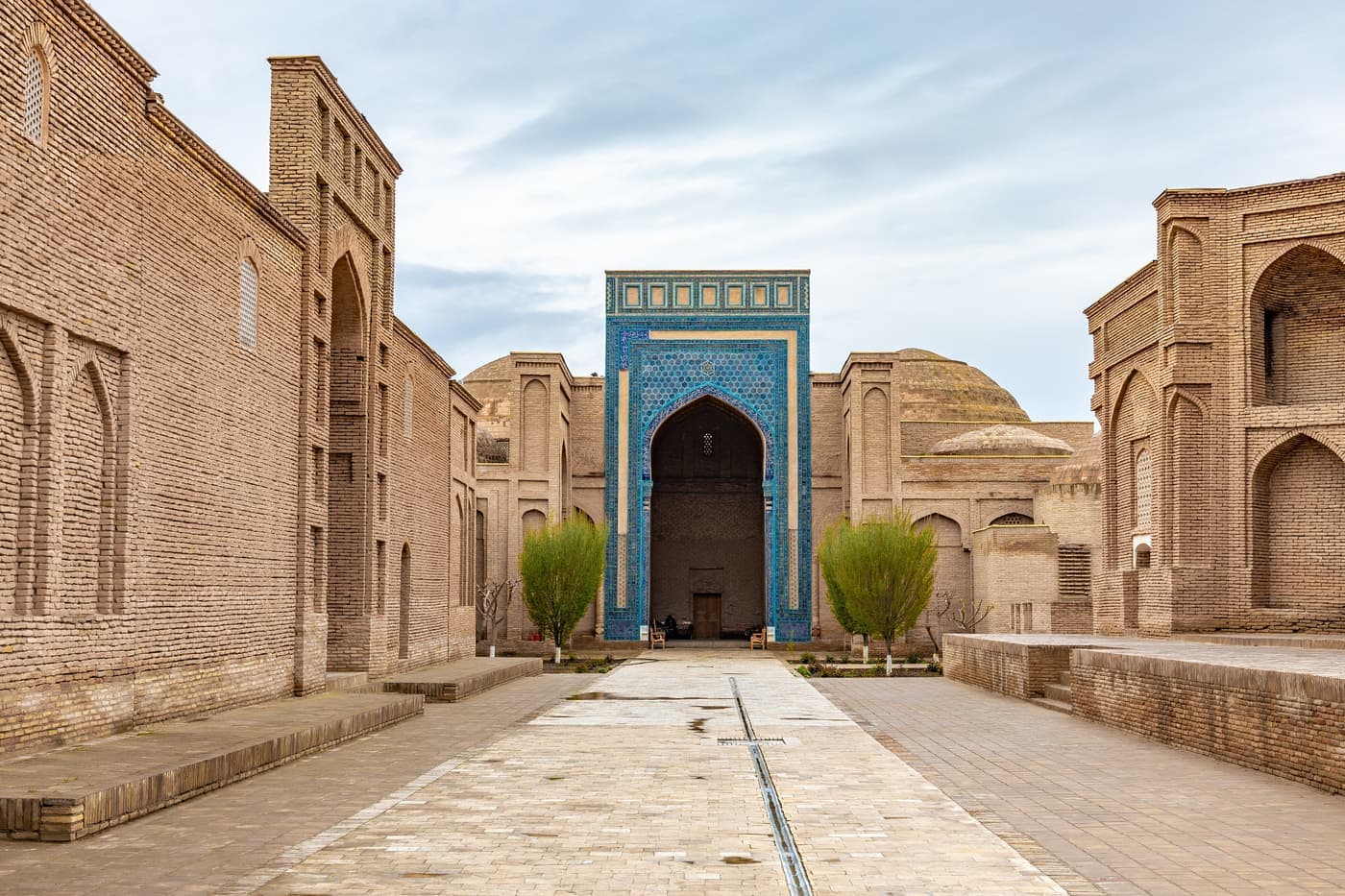
Sultan Saodat Ensemble
The brick mausoleums of the Sayyids of Termez, a family burial ground that grew over several centuries up to the 17th.
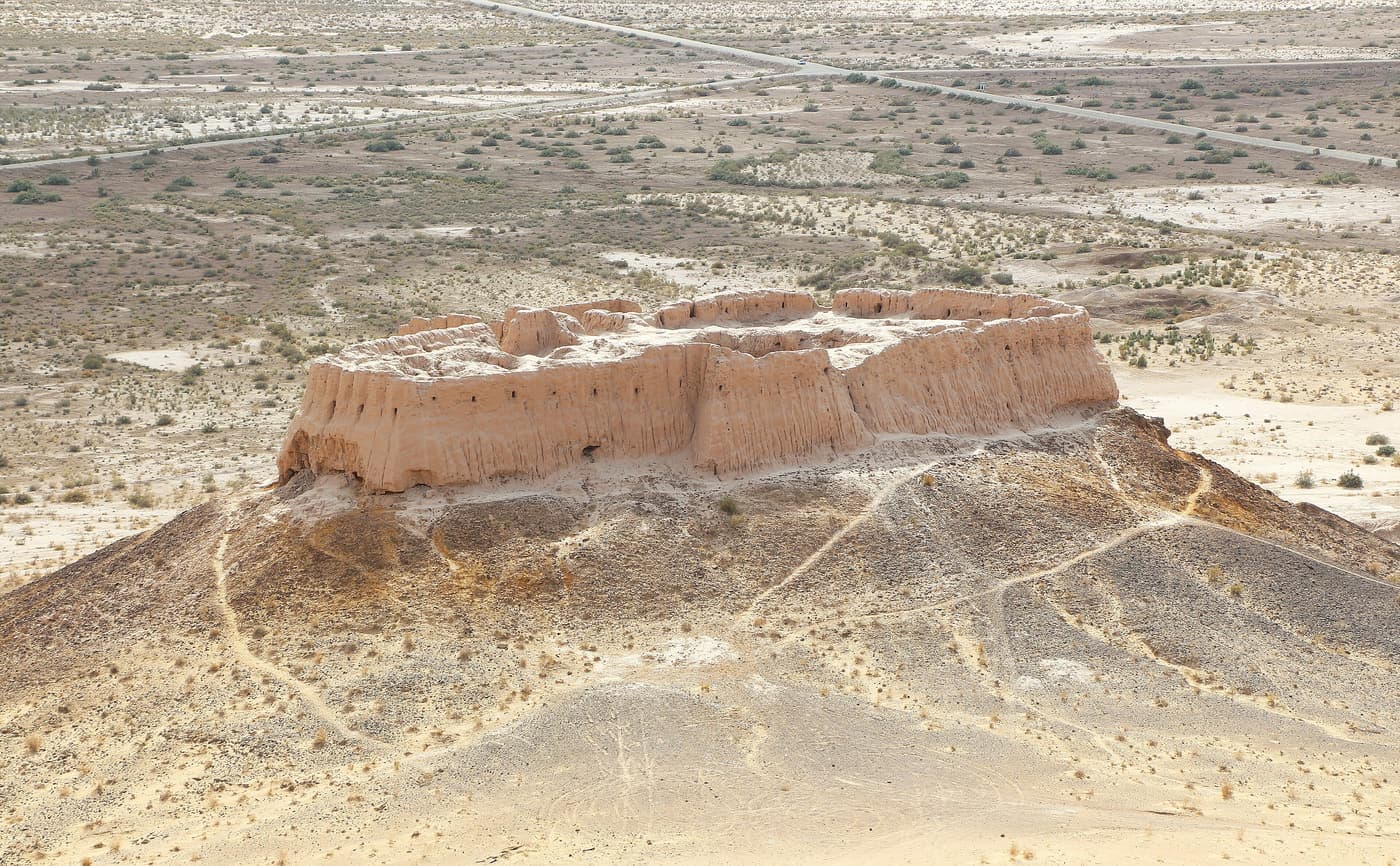
Ayaz-Kala Fortress
Three mud-brick fortresses on and below a desert ridge; the oldest dates from about the 4th century BCE.